
Philosophical Games
Gualeni, Stefano
First published Apr 21st 2022, no current revisions
Philosophical games are games designed to invite players to think philosophically within (and about) their gameworlds. They are interactive fictions allowing players to engage with philosophical themes in ways that often set them apart from non-interactive kinds of speculative fictions (such as philosophical novels or thought experiments). To better understand philosophical games, this entry proposes to distinguish two primary ways in which a philosophical game can approach its themes: dialectically or rhetorically.
Introduction: Philosophical Fictions
Philosophical games are games designed to invite players to think philosophically within (and about) their gameworlds. They are interactive fictions allowing players to engage with philosophical themes in ways that often set them apart from non-interactive kinds of speculative fictions (such as philosophical novels or thought experiments).
Fictional content has historically been an important component of how philosophical knowledge has been developed and communicated. Its use is particularly noteworthy in thought experiments and fictional cases (i.e. verisimilar scenarios used to exemplify or to disprove a certain hypothesis; see De Smedt & De Cruz, 2015; Elgin, 2017; Fisher, 2022). Within the wider horizon of fictions with philosophical scopes and aspirations, games and digital games can be recognized as having unique possibilities that are afforded by their interactivity, replayability and completeness.
With the objective of framing the philosophical use and the speculative potential of games, this entry builds on the theoretical premise that the playful, experiential worlds disclosed by games and digital games are – at least to a degree – fictional (see Robson and Meskin, 2012, 2; Schulzke, 2014; Van de Mosselaer, 2020).1 This entry acknowledges that there are games like Sudoku or Checkers, and digital games such as Tetris (Pajitnov, 1984) that are not commonly discussed in the academic field of game studies as fictions. For the sake of brevity and focus, however, I will not elaborate on this issue and will only reference games that can rather uncontroversially be considered works of fiction.
Philosophers of fiction understand 'fictionality' as a quality of representational content. To identify representational content as 'fictional' indicates that it is meant to be imagined – and not to be believed – to be true. Consequently, an expressive artifact can be considered a 'work of fiction' when it encourages and supports imaginative acts in its audience (i.e. readers, players, movie-goers or radio-drama listeners, and so on; Currie, 1990, p. 30). Within longer-standing forms of fiction such as literature or film, some works are widely considered as having philosophical significance. Think, for example, of novels such as Ursula K. Le Guin's 1974 The Dispossessed or of films such as Richard Linklater's 2001 Waking Life. Their being considered 'philosophical fictions' can be attributed to both the central role that philosophical ideas and questions have in their plots, and – perhaps even more importantly – to their functioning as philosophical tools, that is in their leveraging hypothetical (often unfamiliar or paradoxical) scenarios to stimulate our intuition, trigger our critical faculties and invite us to evaluate alternative possibilities for thinking and being (Gualeni, 2015; Gualeni & Vella, 2020). On these premises, this entry identifies some games as philosophical fictions. As such, their gameworlds are approached as having been deliberately designed to invite players to think philosophically with (and about) them. The next sections of this entry will discuss the potential of games as philosophical tools and how those games' ways of framing ideas and questions set them apart from other forms of philosophical fiction. With these intentions in mind, when examining "philosophical games," I will not consider games and digital games that simply reference (or allude to) philosophers and philosophical ideas. I will, instead, discuss games that any sufficiently informed player would be able to recognize as inviting an active and playful engagement with philosophical themes.2
A game that rewards players for memorizing facts and ideas concerning philosophers is not going to be discussed here as a philosophical game, as such a game does not require its players to think and act philosophically in relation to its gameworld. This hypothetical game would, I argue, be better understood as an educational game whose didactical aims concern the history of philosophy.3 To put it simply, the interactive representation of Socrates as a non-player character (NPC) in Assassins' Creed Odyssey (Ubisoft, 2018) is not the kind of cultural phenomenon that will be addressed here, whereas the argumentation on the illusion of free will that is playfully disclosed by The Stanley Parable (Galactic Cafe, 2011) is.
Philosophical Themes
The question concerning the disciplinary boundaries and aspirations of philosophical inquiry is the subject of millennia-long debates. Because of the great variety of its traditions and currents, and due to the discipline's inextricable involvement with historical and sociotechnical processes, questions like "what is philosophy?" or "what is philosophy about?" are impossible to answer in ways that are brief and uncontroversial. It would, therefore, be unwise to try and address those fundamental questions here. Anticipating that some of the readers might not have an academic training in philosophy, however, I will present a quick outline of what can generally be considered philosophical themes.
Philosophical themes are topics of discussion that revolve around philosophical questions. To be asked – and to be potentially answered – these questions typically require a kind of rational and critical commitment that set them apart from our practical dealings with everyday life. In terms of their focal points, philosophical themes put into question shared beliefs and challenge socially established assumptions. Among themes that are commonly considered to have philosophical import are: ethics, knowledge and its validity, consciousness, the reliability of our perceptions, selfhood and personal identity, the moral status of human and non-human creatures, and our relationships with technology. Questions emerging from some of these themes will be discussed as being purposefully raised through our engagement with philosophical games in the concluding sections of this entry.
Philosophical Games
As already introduced, philosophical games are interactive fictional worlds that are designed to invite players to think philosophically within (and about) them.4 Like non-interactive forms of speculative fiction, philosophical games present fictional contents, feature narrative developments and prescribe various acts of imagination. Three interrelated traits, however, are uniquely characteristic of interactive fiction, and set the experiential worlds of games and digital games apart from other ways to access fictional worlds. These traits are:
Interactivity: a feeling of presence and belonging within the fictional world of the game is primarily upheld by the possibility for the player to persistently and intelligibly interact with in-game objects, characters and events. The manipulability and responsiveness of gameworlds afford players the possibility to take meaningful decisions and actions within those worlds. The fact that player decisions and actions can be recognized as having a philosophical relevance depends on the context in which they are taken, and on what kind of outcomes the designers of a game planned for them. In general terms, it is quite obvious that the philosophical potential afforded emerging from the interactivity of games and digital games relies on players taking responsibility for their actions and on accepting a game's invitation to critically reflect on those actions.
Replayability: in-game situations can be interactively approached in a variety of ways. In most games, players have the possibility to experiment with those situations over and over again until they are satisfied with the resulting state of affairs (or until all possible options have been explored). This can happen over multiple playthroughs or when the game is reverted to a previously saved state. When part of the experience of gameplay, the quality of replayability allows players to approach in-game scenarios and challenges in a fluid and non-committal manner than is not usually an option when those actions and decisions are taken in the actual world (see Gualeni & Vella, 2020, pp. 111-114). Due to the replayability of games, a player is able to assess (and potentially revise) one's decisions and actions in light of having empirical knowledge of their outcomes. The philosophical potential of this trait thus consists in its exposing the fact that contingency is inherent in any given situation, and in its contributing in 'fluidifying' the ways in which players think about the present state of affairs and its possible developments (ibid.).
A higher degree of fictional completeness: in discussing games as forms of fiction that are more aesthetically complete than novels or movies, I am specifically referring to the fictional worlds of digital games. Aside from interactivity, another aspect that is frequently considered to be central to one's existential and emotional engagement with a digital gameworld is its aesthetic consistency. As a consequence of the freedom afforded to their players that was discussed in the previous two points, digital games often need to offer a more complete representation of fictional objects, characters, and events than non-interactive forms of fiction do. In films and novels, the incomplete description of their fictional world can be embraced as an appeal to the appreciator's creativity and an opportunity for them to freely imagine what is not overtly represented in the work. In digital games, instead, aesthetic incompleteness is experienced as a deficiency and a limitation to players' freedom to explore and look at every nook and cranny of the gameworld. For that reason, digital games and interactive simulations tend to disclose the aesthetically richest kinds of fictional worlds (for a more granular and in-depth discussion on this point, see Van de Mosselaer & Gualeni, 2022). A detailed and more complete fictional representation requires more work to be developed than a lesser defined one, but the extra effort also has its philosophical advantages: a higher degree of fictional completeness is considered to be desirable in speculative scenarios that confront their audience with moral dilemmas or discuss human emotions and motivations in context (see Schulzke, 2014, p. 260; De Smedt & De Cruz, 2015; Fisher, 2022).
As argued above, we can understand philosophical games as granting interactive and fluid access to speculative scenarios that invite players to engage with philosophical questions and themes. In relation to those questions and themes, some playful philosophical scenarios are designed to convince players of the soundness of certain observations and courses of action. Other philosophical games are, instead, more ambiguous and exploratory, putting the onus of determining the best course of action and the meaning of in-game decisions (or lack thereof) onto players themselves. One could label this second kind of relationship between a philosophical game and its players as being mainly "dialectical." Following Ian Bogost, instead, one might refer to the first approach as primarily "rhetorical" (Bogost, 2007).
In terms of the rhetorical use of philosophical games, one could – for instance – examine titles that emphasize the hopelessness and unfairness of certain sociopolitical arrangements. Players of these kinds of dystopian games are often not provided with sufficient resources or enough chances to bring about positive changes in the gameworld that they fictionally inhabit. There is an evident rhetorical goal in putting players in a condition where change is impossible and a tragic conclusion is inevitable. Examples of these playable, dystopian reflections on social oppression can be identified in Every Day the Same Dream (Molleindustria, 2009) or Cart Life (Hofmeier, 2010), where players' interactions cannot prevent frustration and loss. In their arguing in favor of a certain point or perspective, rhetorical games tend to either converge towards a single conclusion, like in the cases that were just discussed, or various possible end-states. When multiple end-state are possible, games that take a rhetorical approach to philosophical themes present an obvious hierarchy with regard to their finales. What that means is that some of their game endings will be presented as more appropriate or valid answers to the games' philosophical questions than others.

Fig 1. – Screenshot of Everyday the Same Dream, taken by the author.
Differently from rhetorical games, philosophical games of the dialectical kind allow players to experiment with a number of possible approaches and possibilities without necessarily presenting them hierarchically. An example of this dialectical use of interactive fiction can be identified in Quantic Dream's 2018 action videogame Detroit: Become Human or in the experimental digital game Something Something Soup Something (Gualeni, 2017). Both games appear to be designed to stimulate epistemological crises in the players. Whereas the first has over forty different endings and raises thorny interactive questions concerning personal identity, artificial consciousness and the moral (and legal) status of artificial beings, the second game shepherds the player to the unsettling conclusions that one cannot even conclusively define something as familiar as the notion of soup.
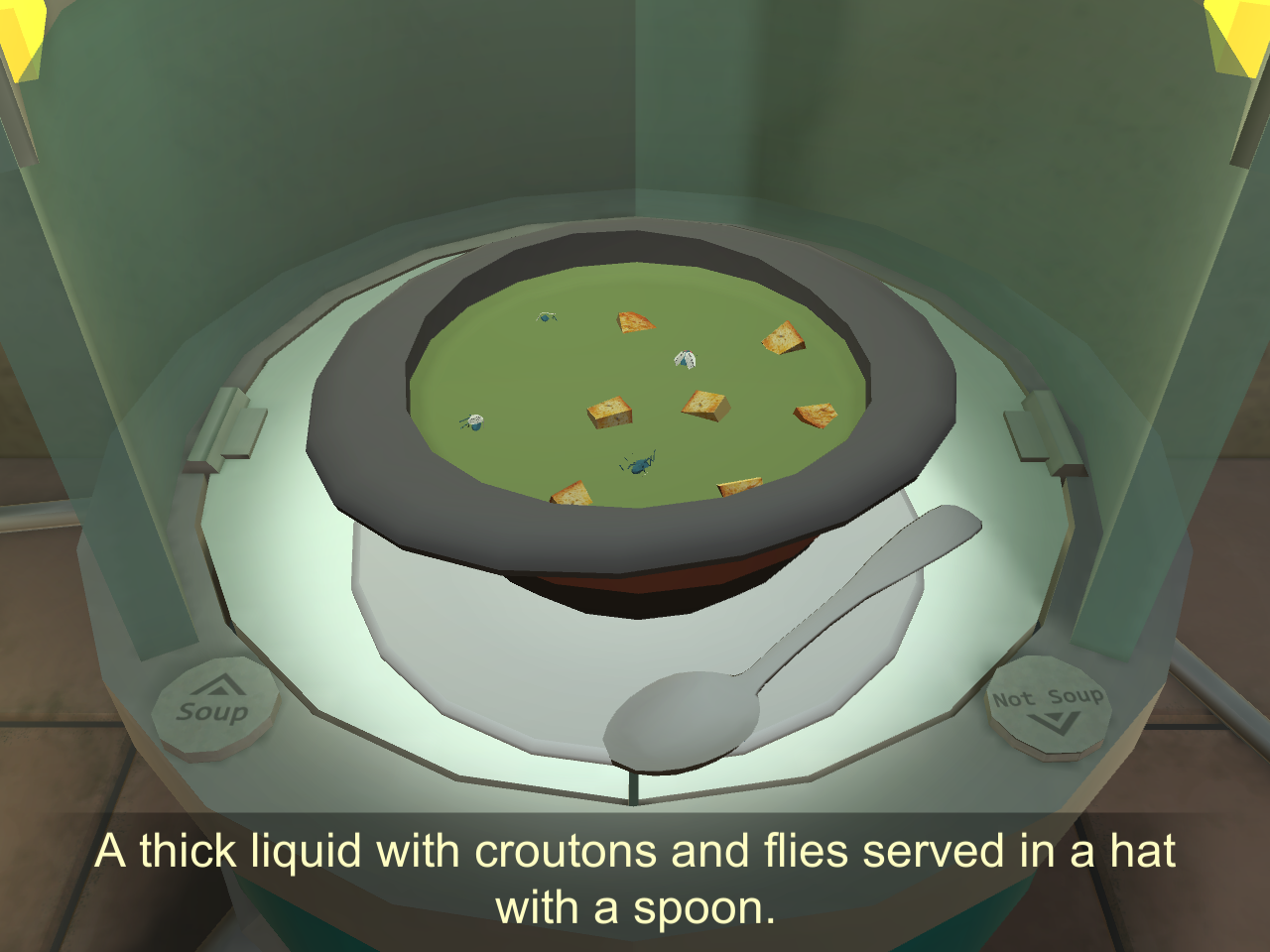
Fig. 2 – Screenshot of Soup Something, taken by the author.
Another distinction that proves useful in understanding philosophical games concerns their focus. Some games, like the already mentioned Detroit: Become Human (Quantic Dream, 2018), are big productions: they are games that last for several hours and build upon – and interweave – multiple themes and tropes from a variety of disciplines (philosophy, literature, law and so on). There are philosophical games that, instead, focus on one theme, or sometimes even on just a single question. When these smaller, usually experimental productions take a predominantly rhetorical approach to their theme (like Jesper Juul's 2021 The Game of Video Game Objects), they can be labelled "playable essays." When focused philosophical games take, instead, a primarily dialectical stance towards their theme, we might refer to them as "playable thought experiments," of which Something Something Soup Something can be considered to be a paradigmatic case.
On the basis of the understanding of philosophical games discussed until this point, and making use of the lexical terms that were just introduced, the next and conclusive section of this entry outlines a thematic taxonomy of philosophical games.
A Brief Thematic Taxonomy of Philosophical Games
This section briefly discusses the questions and activities that presently define the philosophical use of games together with illustrative exemplary cases. Among the most common themes that can be recognized as the focus of contemporary philosophical games are:
ethics and morality,
political dissent and social criticism,
alterity and estrangement, and
our very understanding of games
Allow me to insist on the fact that this is not supposed to be taken as an exhaustive list, and that the individual treatment of each of those themes – which can be found below – merely serves as introductory outlines and as practical references to what is obviously a wider and more nuanced horizon of possible applications. Worthy of mention among the philosophical areas that were not included here are those regarding determinism and the philosophy of religion.
Ethics and Morality
Philosophical games about ethics and morality typically confront the player with choices that are designed to be hard to take (see Zagal, 2011). What makes those situations problematic to act upon usually depends on their ambiguity and on the emotional investment of the players. Some of the ethical dilemmas presented in these games echo (or even directly reference) philosophical perspectives on matters such as moral responsibility. It might help, here, to think of thought experiments like 'the trolley problem' or 'the famous violinist' and about how often interactive fictions disclose similar scenarios to their players. A player who is challenged to think through knotty ethical situations and is asked to act upon them, and is finally faced with their consequences in a fictional context, undergoes experiences that have the potential to be educational and even transformative. Similar to non-interactive fictions, it can be argued that sufficiently engaging and verisimilar philosophical games can help us cultivate and obtain a firmer grasp of theories in moral philosophy, refine our sensitivity and help us better orient our moral compass (see the argument presented by Martha Nussbaum in relation to classical fiction; Nussbaum, 1990, pp. 46-47; p. 171; p. 390).
Videogame franchises such as BioWare's Mass Effect (2007-present), Telltale Games' The Walking Dead (2012), or the war survival videogame This War of Mine (11 bit studios, 2014) can be considered exemplary in this regard, as they famously feature a variety of morally ambiguous scenarios to act upon, and often irrevocable decisions that can lead to the death of some of the protagonists. In Mass Effect, for instance, the Krogans are presented as a resilient and aggressively expansionist alien species known for decimating planets and reproducing at a very fast rate. As a consequence, the fictional galaxy where the game takes place is in danger of being taken over by them. In response to the Krogan spreading, another species – the Salarians – developed the Genophage, a biological device that drastically reduces the rate of birth survival in the Krogans. At a certain point, in Mass Effect 3 (BioWare, 2012), the player character (the commander of the spaceship Normandy SR-1) is given the possibility to cure the Genophage and stop what is effectively an ongoing Krogan genocide. The player can, instead, decide to be complicit in sabotaging the cure. Sabotaging the cure that might save millions of Krogans requires, however, the murder in cold blood of the Salarian crew member of the Normandy, the scientist Mordin Solus.
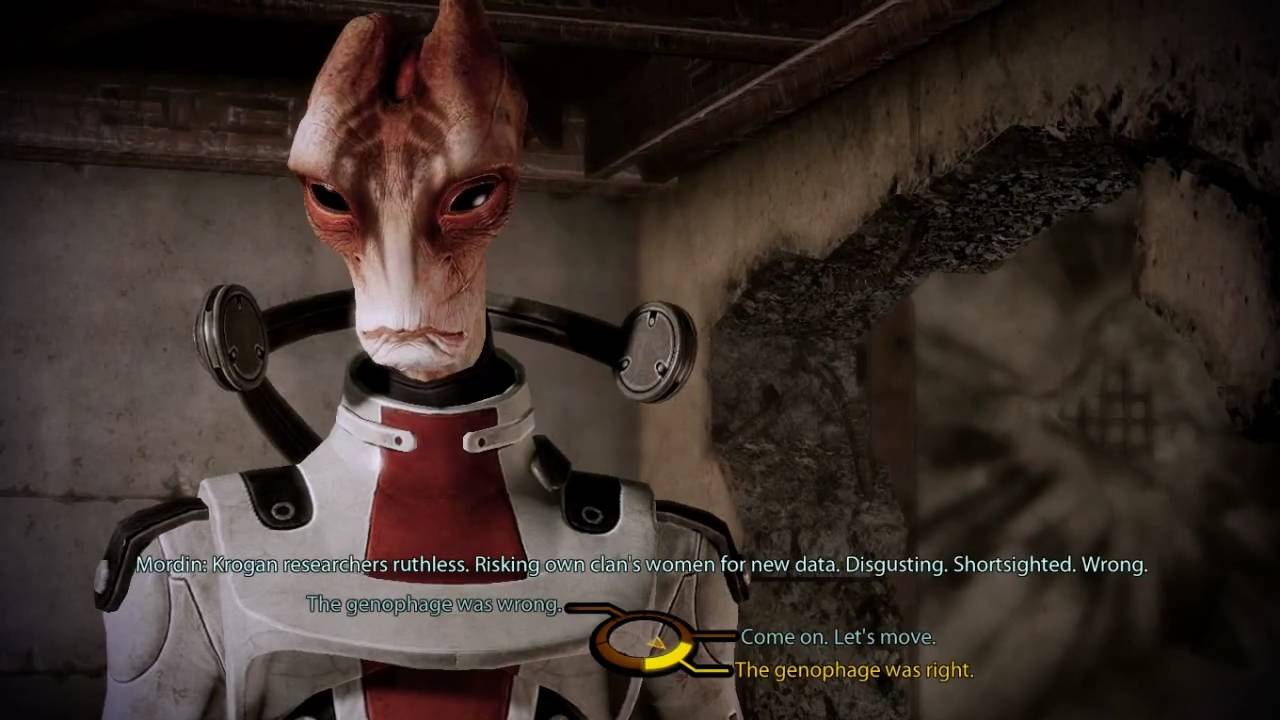
Fig. 3 – Screenshot of Mass Effect 3, taken by the author.
Political Dissent and Social Criticism
Philosophical games about political dissent and social criticism are often of the rhetorical kind, as they tend to be designed to unambiguously communicate the unfairness and/or the unsustainability of a certain political arrangement. Some of these games have, instead, a more utopian approach and reveal, through their gameplay, that the socio-economic systems we know and live in are contingent and subject to change, and that fairer and less oppressive alternatives are always possible. Like other philosophical fictions with similar goals (think of dystopian and utopian works of science fiction), philosophical games of this kind can help the players perfect their grasp of certain social and economic dynamics, and can supplement their political imagination (see De Smedt, 2021). Games like Brenda Romero's 2009 Holocaust-inspired board game Train, Lucas Pope's 2013 bureaucratic dystopian videogame Papers, Please or Molleindustria's 2016 gentrification simulation Nova Alea are widely considered to be successful examples of this use of games.5
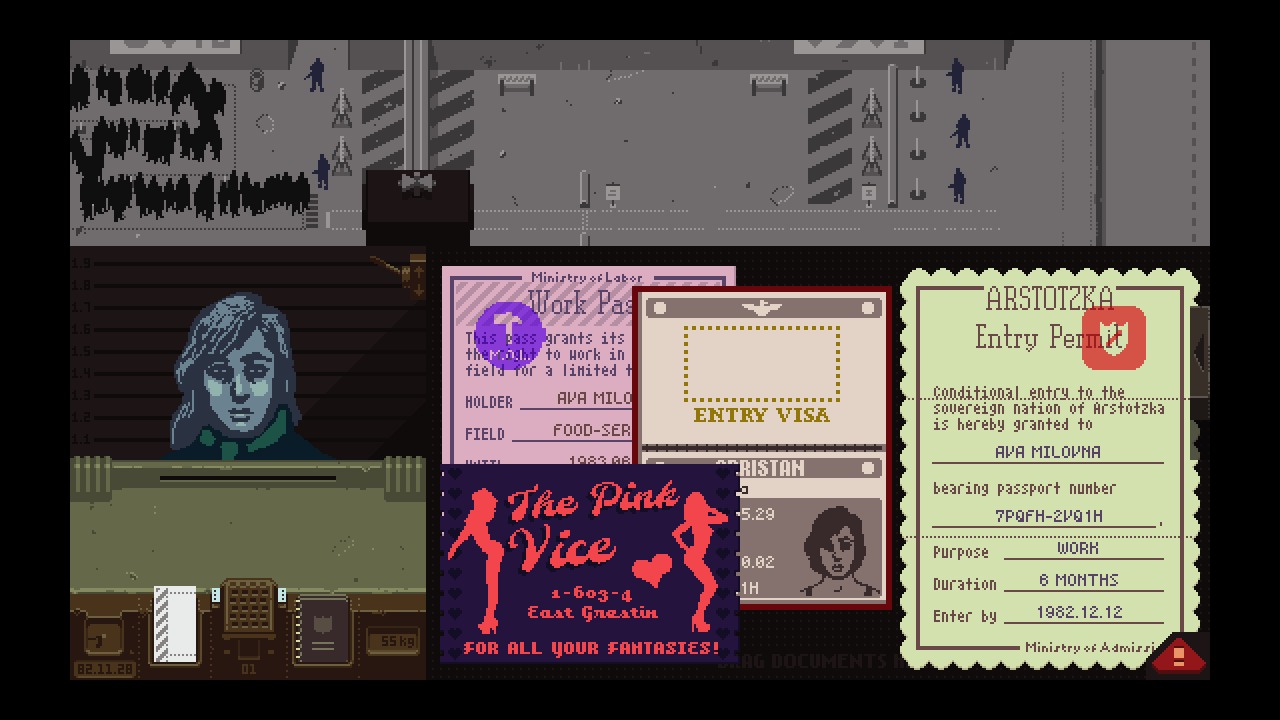
Fig. 4 – Screenshot of Papers, Please, taken by the author.
The political issues addressed by philosophical game are, however, not limited to interactively identifying the inadequacies or the utopian possibilities of society-wide systems. Some games with critical intents directed toward society and politics concentrate their attention on the oppressing effects those customs and institutions have at the scale of the individual human being. This kind of philosophical games focuses on the personal and often mundane cases of economic marginalization, racial discrimination and gender identity. Games like Peter Lu & Lea Schönfelder's 2016 Perfect Woman or the already mentioned retail simulation Cart Life (Hofmeier, 2010) can be deemed emblematic in this regard.
Alterity and Estrangement
Digital games can also have philosophical uses that emerge from their ability to disclose extraordinary experiences for their players. The qualifier "extraordinary" is used here in a way that corresponds to its etymological origin, indicating something that transcends the ordinary, an experience that goes beyond one's everyday relationship with the actual world. Miegakure, for example, is a forthcoming, experimental puzzle-platformer videogame designed by Marc ten Bosch that challenges players to actively solve puzzles in four spatial dimensions. Its gameplay is similar to that of a regular three-dimensional platformer game. By pressing a button, however, one of the dimensions of the gameworld can be exchanged with another spatial dimension: the fourth. This new mechanic allows players to experience moving and manipulating the gameworld in four dimensions and explore the various consequences of doing so. Commenting on these unfamiliar experiences, game designer Jonathan Blow commented in an interview that Miegakure is "a valuable contribution to human experience, right? [...] Marc's creating an experience that would not have been possible to have, had he not made it" (Clark, 2012).
While Miegakure offers a particularly focused and deliberate example of a game that asks us to transcend our customary ways of having experience of and thinking about the world, all digital gameworld can be recognized as disclosing points of view, perceptions and possibilities that are unfamiliar or even incompatible with how we inhabit the actual world as biological creatures. The work of Federico Alvarez Igarzábal (2019) is useful in understandings how time is produced, perceived and manipulated within digital gameworlds, and also exposes its profound incongruences with the human experience of actual time.
There can be several philosophical uses in providing players with extraordinary ways of being in the world. The experimental action adventure videogame Haerfest (Technically Finished, 2010) was developed with that intention of reformulating the questions raised in Thomas Nagel's famous article "What is it Like to Be a Bat?" (1974) as an interactive fiction. Haerfest allows the human player to fly around the gameworld with very limited eyesight and by perceiving volumes via the discontinuous input of an echolocator system, eat moths and hang upside down from rafters. Although its correspondence with the experience of being an actual bat is unverifiable, its gameworld can be understood as disclosing persistent and intersubjective experiences that were previously inaccessible to human beings (Gualeni, 2015, pp. 85-86). Miegakure and Haerfest invite the players to take a philosophical perspective on gameworlds as new experiential and epistemic domains. Similar aspirations can be recognized in titles such as Valve's 2007 puzzle-platformer videogame Portal or the experimental first-person game prototype A Slower Speed of Light (MIT Lab, 2012). Where Portal challenges players to experiment with the idea that space can be interactively made discontinuous (i.e. tunneled through while preserving inertia of motion), A Slower Speed of Light allows them to playfully familiarize with the experience of being affected by special relativity (i.e. what it is like to perceive and interact the gameworld when moving at a speed that approaches that of light).
Our Understanding of Games
Philosophical games often take games themselves as their object of interest. In other words, there are games that invite what is technically called a meta-reflexive (or self-reflexive) perspective. Those games are deliberately designed to materialize, through their gameplay and their aesthetic qualities, critical and/or satirical perspectives on the ways in which games themselves are designed, played, sold, manipulated, experienced and understood as social objects (Gualeni, 2016). The subversion of representational and/or interactive canons are common design strategies through which those kinds of philosophical games encourage players to critically question their relationship with games from a variety of perspectives. In their subversive pursuit, the gameplay of meta-reflexive games often features the overt exhibition of their own constructedness as technical artifacts. In digital games in particular, this often happens by showing players debug information dialogues and broken geometry, or by purposely triggering aesthetic glitches (Gualeni, 2016; 2019).
Meta-reflexive games often disclose experiences that are not inherently enjoyable or rewarding: many philosophical games of this kind are short-lived, unwinnable and purposefully annoying. Another characteristic that frequently characterizes this group of philosophical games is the metafictionality of their narrative. What this means is that characters, narrators and indications that the player receives from interfaces are designed in ways that keep reminding players that they are playing within an artificial fictional world (think of characters' awareness of their own status as fictional beings, or of a narrating voice explicitly addressing the player as a player). Examples of those design strategies are encountered in videogames titles such as Doors (the game) (Gualeni & Van de Mosselaer, 2021), Necessary Evil (Gualeni et al., 2013), the already mentioned The Stanley Parable (Galactic Cafe, 2011), or The Beginner's Guide (Everything Unlimited Ltd., 2015).
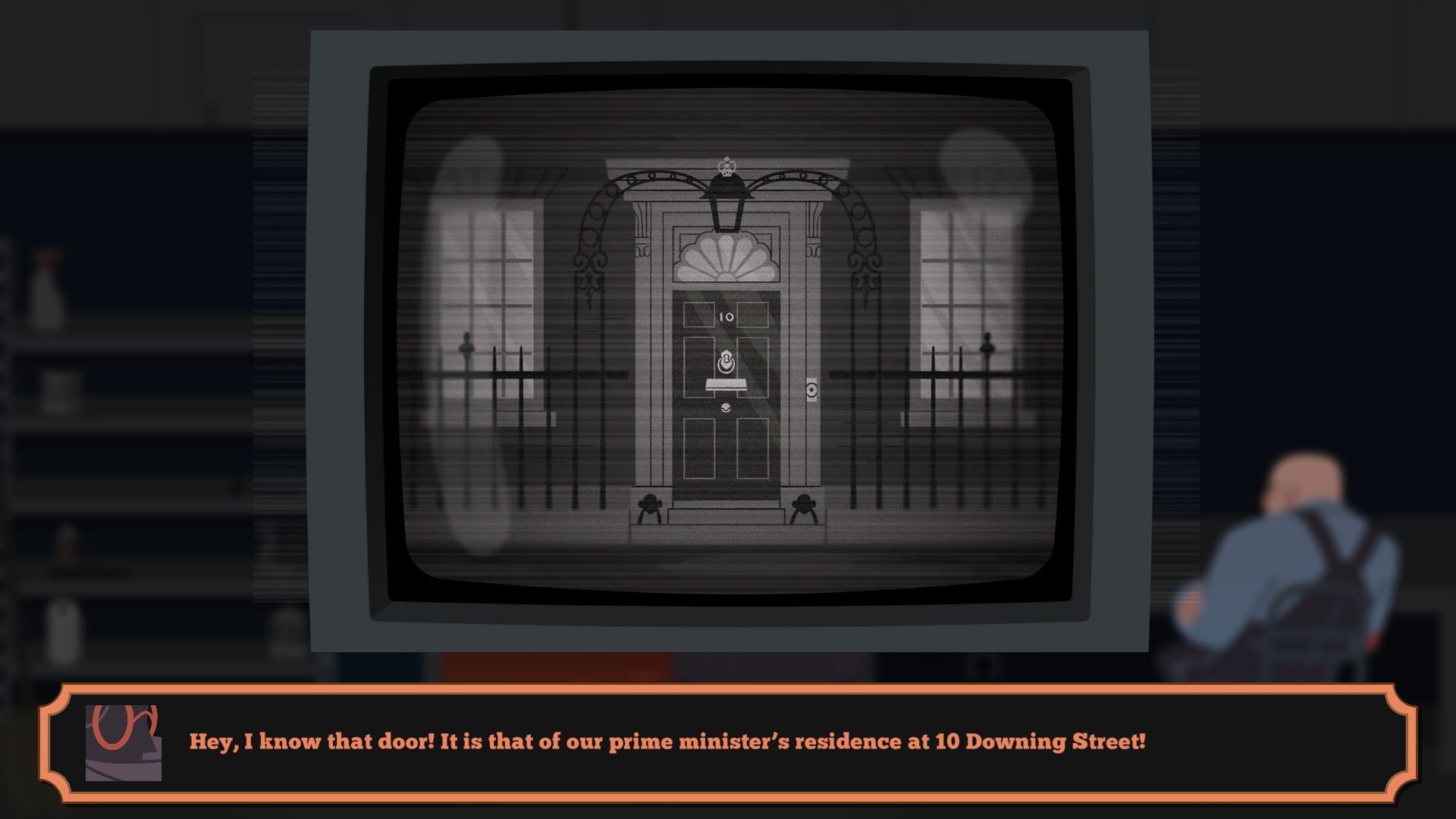
Fig. 5 – Screenshot of Doors, taken by the author.

Fig. 6 – Screenshot of The Beginner's Guide, taken by the author.
It is important to insist on the fact that these games are not whimsically taking a metafictional stance, and do not embrace weirdness and unconventionality as ends in themselves – on the contrary, those games do so with an evident critical intent (or an obviously satirical perspective) on how games are currently made, marketed, played and culturally valued. In the cases of the games mentioned above, Necessary Evil playfully reveals the idealistic player-centrism that underpins the creation of every gameworld, The Stanley Parable is a videogame that constantly breaks the 'fourth wall' to engage players in reflecting on the significance (if any) of in-game agency, and The Beginner's Guide is a playable essay on the very practice of game development and on players' practices of meaning-making.
- Espen Aarseth (2007) argues that digital games are better understood as having a virtual constitution rather than a fictional one. As argued by Wildman and Woodward (2018, p. 125), however, there appears to be no obvious incompatibility between Aarseth's assumed take on 'virtuality' and a perspective that understands fiction as "that which is prescribed to be imagined".↩
- One could, however, disagree with me here, and argue that every game and even each of our experiences – fictional or otherwise – have the possibility of being understood as embedding a philosophical message. That would be a very valid, albeit not very useful, rebuke. I agree with the potential objection that there is no way to neatly separate philosophical and non-philosophical activities. In terms of philosophical relevance, all of our experiences are better understood as on a continuum. The same holds true in the specific context of games and digital games: as designed experiences, they exist on a spectrum of philosophical engagement that goes from titles whose primary function is to entertain and distract their players, to games where the philosophical intentions of the game developers are clearly communicated to the player and are at the forefront of player experience.↩
- Similarly, it is not sufficient for a game to merely allude to philosophers or philosophical works to be deemed philosophical. Take, for example, the case of Pascal, one of the protagonists of the action role-play videogame Tales of Graces (Namco Tales Studios, 2010) who – like her sister Fourier – simply functions as a reference to French intellectuals while the rest of the game does not seem to engage with their work or ideas at all. The same could also be said for games with titles that reference philosophical texts. Games such as Beyond Good and Evil (Ubisoft, 2003) or Too Human (Silicon Knights, 2008), for example, allude to titles of books by Friedrich Nietzsche without establishing a significant relationship with his philosophical legacy.↩
- The proposed definition foregrounds the idea that philosophical games are characterized as recognizable designer intentions of the philosophical kind (for a more detailed treatment of the notion of "implied game designer," see Van de Mosselaer & Gualeni, 2020). With a focus on recognizable designer intentions, this entry will not discuss the possibility for a player to take a philosophical approach towards a game without that game being designed to be philosophical (or without it being clearly recognizable as such). For an example of a practical way to philosophically engage with a game that is not explicitly philosophical, see Westerlaken (2017).↩
- It is relevant to note, here, that one of the games used to epitomize the uses of games for social criticism, Papers, Please (Pope, 2013), could have also worked as an outstanding example of games that challenge players with knotty and ambiguous moral decisions. This iterates on the idea that the various thematic categories discussed in this entry are very general and certainly non-mutually exclusive ways of characterizing philosophical games.↩
Bibliography
11 bit studios (2014). This War of Mine. Digital game published by 11 bit studios for Microsoft Windows.
Aarseth, E. (2007). Doors and perception: Fiction vs. Simulation in Games. Intermédialités: Histoire et théorie des arts, des lettres et des techniques/Intermediality: History and Theory of the Arts, Literature and Technologies, (9), 35-44. https://doi.org/10.7202/1005528ar
Alvarez Igarzábal, F. (2019). Time and space in video games: a cognitive-formalist approach. Bielefeld (DE): Transcript Verlag.
Bogost, I. (2007). Persuasive Games: The Expressive Power of Videogames. Cambridge (MA): MIT Press.
Clark, T. (2012). The Most Dangerous Gamer. The Atlantic, may 2012 issue. https://www.theatlantic.com/magazine/archive/2012/05/the-most-dangerous-gamer/308928
Currie, G. (1990). The Nature of Fiction. Cambridge (UK): Cambridge University Press.
De Smedt, J., & De Cruz, H. (2015). The epistemic value of speculative fiction. Midwest Studies in Philosophy, 39, 58-77. https://doi.org/10.1111/misp.12035
De Smedt, J. (2021). Introduction to Part Two: What We Owe to Ourselves and Others. Speculative Fictions and the Realm of Political Possibilities. In H. De Cruz, J. De Smedt and E. Schwitzgebel (eds.), Philosophy through Science Fiction Stories: Exploring the Boundaries of the Possible, 95-99. New York (NY): Bloomsbury Academic.
Elgin, C. (2007). The Laboratory of the Mind. In W. Huemer, J. Gibson and L. Pocci (eds.), A Sense of the World. Essays on Fiction, Narrative, and Knowledge, 43-54. New York (NY): Routledge.
Fisher, A. (2022, forthcoming). In Defense of Fictional Examples.
Galactic Cafe (2011). The Stanley Parable. Digital Game published by Galactic Cafe for Microsoft Windows.
Gualeni, S., Dini, D., Gómez Maureira, M., Sánchez Sarquiz, J. (2013). Necessary Evil. Digital game accessible at https://evil.gua-le-ni.com
Gualeni, S. (2015). Virtual Worlds as Philosophical Tools. Basingstoke (UK): Palgrave Macmillan.
Gualeni, S. (2016). Self-reflexive Videogames: Observations and Corollaries on Virtual Worlds as Philosophical Artifacts. G|A|M|E – The Italian Journal of Game Studies, 5(1). https://www.gamejournal.it/gualeni-self-reflexive-videogames
Gualeni, S. (2017). Something Something Soup Something. Digital game accessible at https://soup.gua-le-ni.com
Gualeni, S. (2019). On the de-familiarizing and re-ontologizing effects of glitches and glitch-alikes. Proceedings of the 2019 DiGRA International Conference. Kyoto (Japan). http://www.digra.org/wp-content/uploads/digital-library/DiGRA_2019_paper_20.pdf
Gualeni, S., & Vella, D. (2020). Virtual Existentialism: Meaning and Subjectivity in Virtual Worlds. Basingstoke (UK): Palgrave Pivot.
Gualeni, S., & Van de Mosselaer, N. (2021). Doors (the game). Digital game accessible at https://doors.gua-le-ni.com
Hofmeier, R. (2010). Cart Life. Digital game published by Adventure Game Studio for Microsoft Windows.
Juul, J. (2021). The Game of Video Game Objects. Digital game accessible at https://www.jesperjuul.net/text/gameofobjects
Le Guin, U. K. (1974). The Dispossessed. New York (NY): Harper and Row.
Linklater, R. (2001). Waking Life. Film produced by Thousand Worlds and distributed by Fox Searchlight Pictures.
Lu, P., & Schönfelder, L. (2016). Perfect Woman. Digital game published by Peter Lu & Lea Schönfelder for the Microsoft Xbox One.
MIT Lab (2012). A Slower Speed of Light. Digital game prototype accessible at http://gamelab.mit.edu/games/a-slower-speed-of-light
Molleindustria (2009). Every Day the Same Dream. Digital game accessible at http://www.molleindustria.org/everydaythesamedream/everydaythesamedream.html
Molleindustria (2016). Nova Alea. Digital game accessible at https://molleindustria.org/nova-alea
Namco Tales Studios (2010). Tales of Graces. Digital game published by Namco Bandai Games for the PlayStation 3.
Nagel, T. (1974). What is it Like to Be a Bat? Readings in Philosophy of Psychology, 1, 159-168.
Nussbaum, M. C. (1990). Love's Knowledge: Essays on Philosophy and Literature. New York (NY): Oxford University Press.
Pajitnov, A. (1989) [1984]. Tetris. Digital game published by Nintendo for the Nintendo Entertainment System.
Pirsig, R. (1974). Zen and the Art of Motorcycle Maintenance. New York (NY): William Morrow and Company.
Pope, L. (2013). Papers, Please. Digital game published by 3909 LCC for Microsoft Windows.
Quantic Dream (2018). Detroit: Become Human. Digital game published by Sony Interactive Entertainment for the PlayStation 4.
Robson, J., & Meskin, A. (2012). Video Games as Self‐Involving Interactive Fictions. The Journal of Aesthetics and Art Criticism, 74(2), 165-77. https://www.jstor.org/stable/44510494
Schulzke, M. (2014). Simulating philosophy: Interpreting video games as executable thought experiments. Philosophy & Technology, 27(2), 251-265. https://link.springer.com/article/10.1007/s13347-013-0102-2
Silicon Knights (2008). Too Human. Digital game published by Microsoft Game Studios for the XboX 360.
Technically Finished (2010). Haerfest. Digital game published by NHTV Internationaal Hoger Onderwijs Breda for Microsoft Windows.
Ten Bosch, M. (in development). Miegakure. Digital game currently in development with information and materials accessible at https://miegakure.com
Ubisoft Pictures & Ubisoft Milan (2003). Beyond Good and Evil. Digital game published by Ubisoft for the PlayStation 2.
Ubisoft Quebec (2018). Assassins' Creed Odyssey. Digital game published by Ubisoft for the PlayStation 4.
Valve (2007). Portal. Digital game published by Valve for the PlayStation 3.
Van de Mosselaer, N. (2020). The Paradox of Interactive Fiction. Doctoral dissertation at the University of Antwerp (Belgium). https://repository.uantwerpen.be/docstore/d:irua:1276
Van de Mosselaer, N., & Gualeni, S. (2020). The Implied Designer and the Experience of Gameworlds. Proceedings of the 2020 DiGRA International Conference: Play Everywhere. Tampere (Finland). http://www.digra.org/wp-content/uploads/digital-library/DiGRA_2020_paper_36.pdf
Van de Mosselaer, N. & Gualeni, S. (2022, forthcoming). The Fictional Incompleteness of Digital Gameworlds. Transactions of the Digital Games Research Association (ToDIGRA) Journal.
Vella, D., & Gualeni, S. (2019). Virtual Subjectivity: Existence and Projectuality in Virtual Worlds. Techné: Research in Philosophy of Technology, 23(2). https://doi.org/10.5840/techne201951499
Westerlaken, M. (2017). Self-fashioning in action: Zelda's Breath of the Wild Vegan Run. Proceedings of the 2017 Philosophy of Computer Games International Conference. Krakow (Poland). https://www.diva-portal.org/smash/get/diva2:1407940/FULLTEXT01.pdf
Wildman, N., & Woodward, R. (2018). Interactivity, fictionality, and incompleteness. In J. Robson & G. Tavinor (eds.), The Aesthetics of Videogames, 112-127. New York (NY): Routledge.
Zagal, J. P. (2012). Encouraging Ethical Reflection with Video Games. In Jose P. Zagal (ed.), The Videogame Ethics Reader (revised 1st ed.). San Diego (CA): Cognella.
Author Information
Stefano Gualeni (Ph.D.) is a philosopher who designs digital games and a game designer who is passionate about philosophy. He is an Associate Professor at the Institute of Digital Games (University of Malta), and a Visiting Professor at the Laguna College of Art and Design (LCAD) in Laguna Beach, California. Stefano is the writer and designer of the point-and-click video game adventure series Tony Tough (2001-2007) as well as many other titles both commercial and experimental (see www.gua-le-ni.com). He is the author of three monographic books: Virtual Worlds as Philosophical Tools (Palgrave, 2015), and Virtual Existentialism: Meaning and Subjectivity in Virtual Worlds (Palgrave Pivot, 2020 – with Daniel Vella), and Fictional Games (forthcoming for Bloomsbury Academic – with Riccardo Fassone).
Citation Information
Gualeni, S. (2022). Philosophical Games. In Grabarczyk, P. (ed.), Encyclopedia of Ludic Terms (Spring 2022 Edition). URL: https://eolt.org/articles/philosophical-games/
Copyright
©2026 Encyclopedia of Ludic Terms (EoLT) Copyright for articles published in this encyclopedia is retained by the EoLT, except for the right to republish in printed paper publications, which belongs to the authors, but with first publication rights granted to the encyclopedia. By virtue of their appearance in this open-access encyclopedia, articles are free to use, with proper attribution, in educational and other non-commercial settings.